Accra Mother of Three Reveals the 7-Conversation System That Helped Her Pull Her Teenage Son Back From the Wrong Path — Before She Got That 3AM Phone Call She Had Been Dreading for Two Years
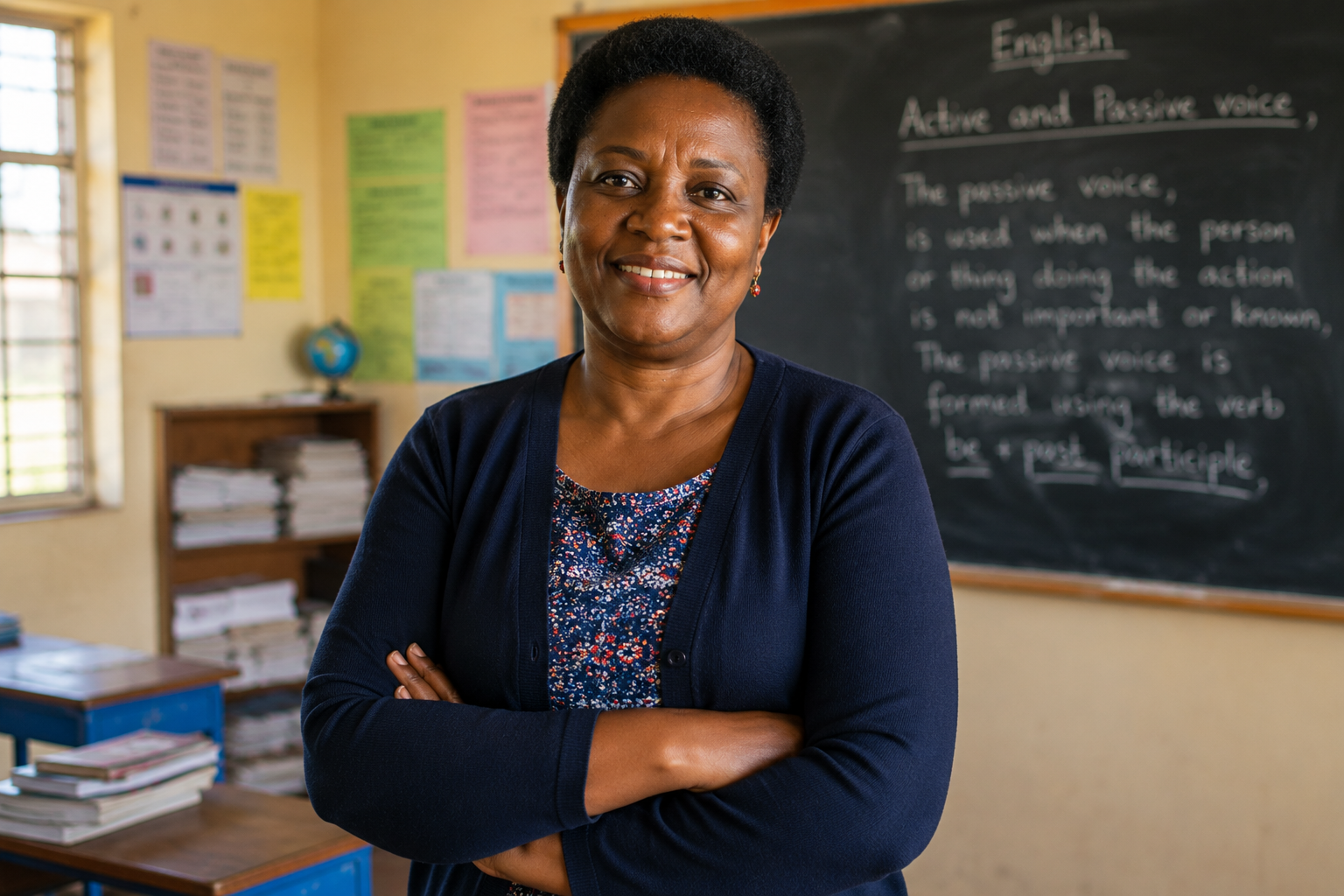
If you have a teenage son who has changed... who barely speaks to you anymore... who comes home and disappears into his room like a stranger in your own house — please read every single word on this page.
You are a good mother.
You have always been a good mother.
You go to work. You pay the school fees. You put food on the table. You attend PTA meetings without fail. You pray for your children every morning before they are even awake. You sacrifice things they will never know you sacrificed.
And still — somehow — you are losing your son.
Not to distance. Not to death. But to something almost worse: silence. A wall between you and the boy you raised with your own hands that you cannot see, cannot touch, and cannot seem to break through no matter what you try.
You know exactly the feeling I am describing.
He comes home from school. You say hello. He says "mh" and heads straight to his room.
You try to ask about his day. One word. Eyes on the phone.
You try to talk about his grades, his future, his behaviour — and you can actually see the shutters come down behind his eyes. He is standing right there. But he is not listening. He is somewhere else entirely.
He has new friends you do not recognise. Boys who do not greet you properly when they come to the house. Boys who wait outside and call him rather than knock. Boys whose eyes carry something that makes your stomach turn when you look at them too long.
"Who are these boys? Where do they come from?"
"They are just my friends, Mum. You worry too much."
You do not worry too much. You worry exactly the right amount. Because you are his mother.
Maybe he is in senior secondary school now and his results have been dropping term after term. Maybe the school has called you. Maybe a neighbour or a teacher has told you something that you are still trying to process. Maybe you have not found anything concrete yet — but something in you, something deep and certain, is telling you that if nothing changes soon, you will lose him to something you cannot undo.
What if he makes a decision tonight that costs him the rest of his life?
What if those boys are already doing things I don't know about?
What if I say the wrong thing and push him further away?
What if I say nothing — and that silence becomes the thing I regret forever?
You have tried shouting. It made things worse.
You have tried threatening. He learns to say the right things for three days and then returns to exactly where he was.
You have cried in front of him. He felt guilty for a short while. Nothing changed.
You have prayed — and you will keep praying — but something in you is beginning to understand that God may be asking you to act alongside the prayer. And you do not yet know what that action looks like.
You lie awake listening for the sound of the front door. Every time your phone rings after 9PM, your heart stops for half a second before you check the screen.
You are exhausted. You are frightened. And you are still searching, still trying, still refusing to give up — because giving up is not something a mother does when it comes to her child.
I know exactly how you feel. Because not long ago, I was sitting exactly where you are now.
My name is Joy Mensah. I am a 44-year-old secondary school teacher from Adenta, Accra. I have three children. My son Emmanuel is 19 years old — in university now, talking to me again, planning his future with genuine excitement.
But three years ago, I was not sure any of that would happen.
And the night I received a call telling me my son had been seen near a fuel station robbery not far from our home — even though he was not involved — was the night I knew I had to find a different way. Fast. Before the next call was something I could not recover from.
Drop everything you are doing right now and listen to every word I am about to say.
Because what I am about to share with you changed everything for me. And it can change everything for you too.
"Because I'm about to share with you the 7-conversation system that brought my son back — and has now helped hundreds of mothers across Ghana and beyond do the same."
African mothers have known something for generations that no parenting book published in London or New York will ever truly teach you.
They knew that a teenage boy cannot be reached through force alone. He cannot be shouted into becoming a good man. He cannot be threatened into choosing the right path. He cannot be guilted into opening his heart to the woman who loves him most in this world.
What reaches him is something far simpler — and far more specific — than any of that. The women in our grandmothers' generation understood this without being taught it. They passed it down through example, through the specific way they sat beside their sons and spoke to them at the right moment with the right words. Not lectures. Not long sermons on Sunday evenings. Conversations. Specific ones. Timed carefully. Delivered with the right tone and the right tools behind them.
That knowledge was never written down. It was shared quietly — one mother to another — in church compounds, at family gatherings, in kitchen conversations after the younger ones had gone to bed.
Until now.
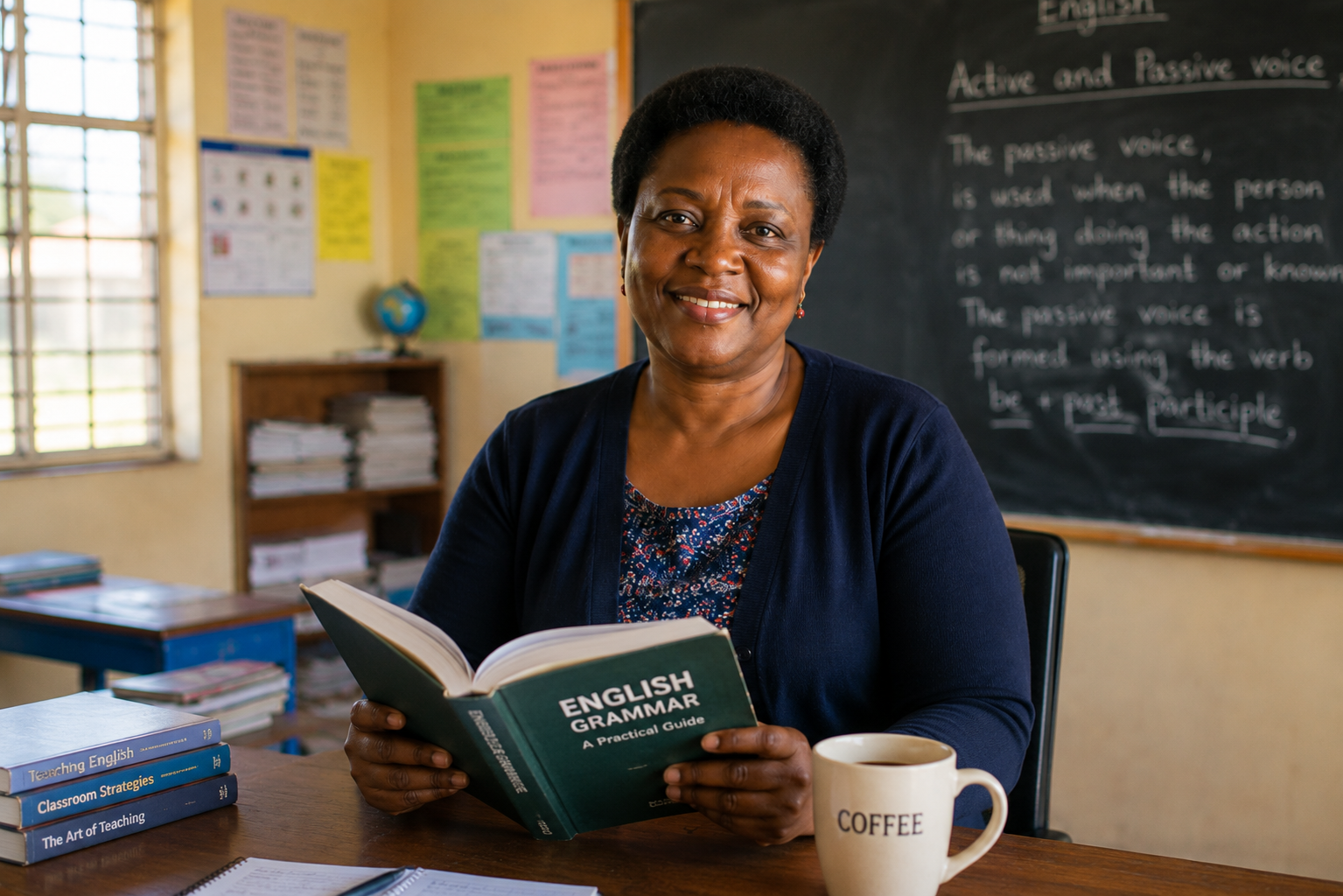
My name is Joy. And I am not an expert. I am just a mother who almost lost her son — and found what actually works.
First thing you should know about me: I am not a psychologist. I am not a parenting coach. I am not a doctor or a counsellor. I have no letters after my name and no certificate on my wall that qualifies me to tell you how to raise your son.
I am a literature teacher at a secondary school in Adenta. I have been teaching for nineteen years. I know teenagers well — I spend my working days with them. And still, my own son became a stranger to me.
I want to tell you exactly what happened. Because I think you will recognise your own story inside mine.
How It Started
My husband Kofi took a work placement in Takoradi when our son Emmanuel was twelve years old. It was a good opportunity for the family. We agreed it would be temporary — two, maybe three years. He would come home for school holidays and important occasions.
Emmanuel was a good boy at twelve. Serious about his studies. Active in the church youth group. He loved football and was in the school team. He was the kind of son that made you feel — quietly, in your heart — that you were doing something right.
Then he turned fourteen.
I cannot point to the exact day it changed. It happened like a slow change in weather — so gradual that you do not realise you are cold until you are already shivering. By the time I truly saw what was happening, it had already been going on for months.
He stopped coming to sit with me after school. He stopped telling me about his day. He stopped laughing at the things we used to laugh about together. His room became somewhere he disappeared into the moment he arrived home. His phone became something he positioned carefully whenever I came near — face down, or angled away from me.
New friends appeared. Boys I did not know. Boys who stood outside and called to him instead of coming inside to greet me. Boys whose manner had a hardness in it that made me uneasy in a way I could not explain to anyone else.
"Emmanuel, who are these boys? Are they from your school?"
"They are just from the area, Mum. You worry too much."
His results dropped. Not dramatically at first — enough that I noticed, not enough to be certain. By the time it was undeniable, he had slipped from near the top of his class to somewhere in the lower half. His form teacher called me. Emmanuel had missed classes I had not known about.
The Emotional Cost
I will be honest about what this does to a mother — not just the fear of it, but the shame of it.
In our communities, in our churches, a son who is going wrong is a reflection on his mother first. I knew what people were beginning to notice. I felt it in the careful way conversations paused when I arrived at church fellowship. I felt it in the way my own sister chose her words on the phone — what she was not saying speaking louder than what she was.
My husband Kofi would call from Takoradi and ask about Emmanuel and I would give him the edited version. Not lying exactly — just choosing which parts to include. Because I did not want to say out loud what I could not yet say even to myself: I am losing our son and I do not know how to stop it.
I started sleeping badly. I started leaving for work in the mornings with a heaviness I carried all day. I started sitting in my car in the compound when I came home — just for a few minutes — preparing myself for the silence that waited behind the front door.
The Breaking Point
It was a Thursday evening in March. Emmanuel was sixteen.
My neighbour Abena called me just after ten o'clock at night. Her voice had that careful, controlled quality of someone trying to deliver difficult news gently.
"Joy. Emmanuel is fine — I want to say that first. He is fine. But I saw him a short while ago near the fuel station on the main road. There were police cars. Something had happened there. I am not saying he was involved. But he was there, with those boys."
I do not remember the next few minutes clearly. I called Emmanuel's number and he answered immediately — "Mum? What?" — and the sound of his voice was the thing that brought me back into my body.
He was not involved. He had simply been in the wrong place. He came home twenty minutes later looking defiant and frightened at the same time — the specific combination that teenagers wear when they know they cannot defend what just happened.
I looked at him for a long time without speaking. Then: "Emmanuel. Go to bed. We will talk in the morning."
I sat in the kitchen alone until past midnight. And I made a decision. What I had been doing was not working. Every tool I had used had failed. I needed to find something different. And I needed to find it quickly — before the next incident was something I could not come back from.
Everything I Tried That Failed
I want to tell you exactly what I tried, because I want you to see that I was not passive. I tried hard. I tried with everything I had. And none of it worked — not because I am a bad mother, but because I was using the wrong tools for the specific problem I was facing.
- SHOUTING AND INCREASING THE SEVERITY OF MY WARNINGS every time he came home late or gave me a single-word answer — he shut down faster, the house became colder, and the distance between us grew wider, not narrower.
- CONFISCATING HIS PHONE FOR TWO WEEKS — he borrowed phones from friends within days. He became more secretive, not less. The resentment deepened and I lost even the small window of visibility I had into his life.
- INVOLVING THE YOUTH PASTOR FROM OUR CHURCH — Emmanuel sat through the conversation respectfully and changed nothing. He learned to perform compliance. It lasted less than a week.
- CONTACTING THE MOTHER OF ONE OF THE BOYS I WAS WORRIED ABOUT — the woman was defensive, the boys found out I had called, and Emmanuel's trust in me dropped further because he felt I had publicly embarrassed him.
- CRYING IN FRONT OF HIM AND TELLING HIM HE WAS BREAKING MY HEART — he was remorseful for a few days and then returned to exactly where he had been. The guilt made him more withdrawn, not more open.
- COMPARING HIM TO HIS COUSIN NANA who was performing well in school and making good choices — Emmanuel heard only that he was not enough. That comparison became a wall between us I did not know how to remove.
- ASKING MY MOTHER TO COME AND SPEAK TO HIM — he was respectful while she was present and completely unchanged the moment she left. The elder's voice carried weight in the moment only.
Seven genuine, sincere attempts by a mother who loves her son completely. Seven failures. Not because I did not care. Because caring is not the same thing as having the right tools.
The Sunday That Changed Everything
Three weeks after the fuel station incident, I attended the Sunday evening service at our church in Adenta. I went not because I believed it would fix anything. I went because I did not know what else to do with myself at that hour, and staying home meant sitting in a house where my son had locked himself in his room again.
After the service I sat alone in the back of the hall for longer than I intended. My hands in my lap. Staring at nothing. I was not crying. I was past crying. I was in that terrible stillness of a person who has genuinely run out of ideas.
A small woman sat down beside me. I had seen her at our church before — always present, always quiet, always near the back. The kind of person you pass without noticing until she speaks. And then you understand immediately that you should have been paying attention all along.
She did not ask what was wrong. She did not introduce herself. She simply said — quietly, without looking directly at me:
"It is the boy, isn't it."
It was not a question.
I turned to look at her and nodded. And something about the way she received that nod — without pity, without alarm, with only the calm recognition of someone who had sat beside this exact kind of pain many times before — made me start talking.
I talked for almost an hour. She listened to every word. She did not interrupt. She did not offer quick reassurances. She simply listened with the quality of attention that belongs to someone who has earned it through thirty years of difficult work.
When I finished, she was quiet for a moment. Then:
"You have been using the wrong tools. Everything you have tried speaks to the adult he is supposed to become. Not to the boy who is actually standing in front of you right now. Let me show you what actually reaches them."
Maame Akosua Boateng
Her name was Maame Akosua Boateng. Seventy-one years old. Retired guidance and counselling teacher — thirty-four years working specifically with troubled teenage boys at a senior secondary school in Kumasi before retiring to Accra to be near her grandchildren.
She had raised four sons of her own. Three were professionals. One had given her years of worry before finding his way at twenty-two.
She had spent her retirement quietly helping mothers in her neighbourhood whose sons were struggling. She never charged anything. She was known in our church as the woman to go to when the pastor's prayers alone had not been enough.
I did not know any of that when I sat beside her. I only knew that she had seen something in me without being told, and that her voice carried the weight of someone who had earned everything she said.
What She Told Me
Over the next two weeks, Maame Akosua met with me three times in her sitting room. Each time she went deeper into what she called the seven conversations.
She told me that teenage boys do not respond to the tools mothers have been given — the shouting, the threatening, the emotional appeals, the external authority of pastors and fathers and elders — because those tools all speak to the adult the boy is supposed to become. They do not speak to the boy who is in front of you right now, in this body, at this age, under the specific pressures of this generation.
"A teenage boy's mind," she told me, "is still forming. The part that thinks about the future — that weighs consequences, that understands long-term sacrifice — that part does not fully develop until he is in his mid-twenties. You are trying to reach a mind that cannot yet fully hear you in the way you are speaking to it. You have to meet him where he is. Not where you wish he was."
She told me that what reaches a teenage boy is not force and not tears. It is seven specific conversations — each one designed to meet him at the exact point where he is most lost. Not one long intervention. Seven targeted conversations. Each on a different subject. Each at the right moment. With the right words and the right tools behind them.
The conversations, she explained, cover seven things:
1. His vision of his own future. Not your vision for him. His. A boy who cannot see his future clearly will be claimed by whatever is nearest and most immediate — which is often the street.
2. His friendships. Not through accusation — that always backfires with teenagers. Through a specific method that helps him evaluate his friends himself and arrive at the truth without you needing to push him there.
3. What real manhood looks like. Because the boys around him and the phone in his hand have already given him a definition. And that definition will destroy him. You need to replace it with something true before it takes hold permanently.
4. Sex and consequences. Not through shame. Through specific, honest truth about what one wrong decision at sixteen can cost — in years, in futures, in everything he says he wants.
5. Money and shortcuts. Because somewhere near him, a boy his age has fast money and new clothes. And your son is watching. This conversation makes the honest path more compelling than the fast one — in language he cannot dismiss.
6. His phone and what it is doing to his mind. Not by taking it away. By showing him what it is doing and giving him a framework to manage it himself — so the discipline comes from inside him, not just from your rules.
7. And finally — the conversation that repairs everything. The one where he truly understands that there is nothing he can do — nothing — that will make you stop fighting for him. This one changes the foundation of your relationship.
"These conversations," she told me, "I have been sharing with mothers for thirty years. One at a time. In church corridors. At school gates. At kitchen tables late at night. I have never written them down. But they work — not because they are magic, but because they speak to the boy who is actually there."
My honest first reaction? This seems too simple.
I had been expecting something bigger. More complicated. More dramatic. This was just... conversations. Carefully timed ones, yes. With specific words. But conversations.
"Maame Akosua," I said, "I have been talking to my son for two years. Talking has not worked."
She looked at me with the patience of someone who has heard this many times.
"You have been talking. You have not been having these conversations. There is a difference. Try it. Start with the first one. Nothing dramatic. Just the car, one question, and then silence. Watch what happens."
I Tried It. And Nothing Happened. At First.
I had the first conversation with Emmanuel on a Saturday morning — driving him to football training. Fifteen minutes in the car. Side by side. No eye contact required, which Maame Akosua had told me mattered greatly with teenage boys.
I did not shout. I did not threaten. I asked the specific question she had given me — just one question, framed in a very particular way — about his future. Then I stayed quiet.
He was silent for almost a full minute. I sat with the silence. I did not fill it. I let it be.
And then he started talking.
He spoke for eleven minutes without stopping. I timed it later. It was the longest Emmanuel had spoken to me in over a year. I did not interrupt once. I did not correct. I just drove and listened.
By the end of that fifteen-minute drive, I knew three things about my son that I had not known that morning. Three important things. Things that changed how I understood what had been happening with him.
That was Week 1.
The Change Was Not Dramatic. It Was Real.
By Week 3, Emmanuel was occasionally sitting in the kitchen while I cooked. Not talking about anything significant. Just present in a way he had not been present in two years.
By Week 6, he had quietly stopped spending time with two of the boys I had been most worried about. He did not announce it. He did not explain it. He simply redirected — the way a person redirects when something has shifted in how they see things.
By Month 3, his form teacher called me. Not with a complaint. To ask what had changed at home, because Emmanuel's engagement in class had noticeably improved. I said we had been having better conversations. The teacher said: "Whatever you are doing, keep doing it."
By Month 5, Emmanuel told me about an IT programme he wanted to apply to after completing his WASSCE. He had a plan. He was talking about his future with actual excitement — the voice of someone who has begun to believe that a future is something worth preparing for.
He was my son again.
The Call From Kofi
My husband Kofi called from Takoradi on a Sunday evening in the fourth month. Emmanuel had called him earlier that day — something that had not happened on Emmanuel's own initiative in over a year. They had spoken for forty minutes.
Kofi said to me quietly:
"Joy. What did you do? He called me. He actually called me. He was talking about an IT programme he wants to do. He sounded like himself again. What did you do?"
I said: "I learned how to talk to him differently."
Kofi was quiet for a moment. Then: "You saved him. I want you to know I see that. You saved our son."
I will not pretend I did not cry when I put down the phone. But it was a completely different kind of crying.
And Then Other Mothers Started Asking Me
I began sharing what I had learned informally with mothers from my church and my community who were struggling with similar situations. The same way Maame Akosua had shared with me.
Abena from Tema had a seventeen-year-old who had been suspended twice in one term. Three weeks after she tried the first conversation, she sent me a message: "Joy, my son asked me to help him look at technical institute courses. He asked ME. Voluntarily. I cannot explain what has happened in this house."
Efua from Kumasi had been living in fear about her fifteen-year-old who was spending money she could not account for and coming home with things he could not explain. After the fifth conversation — the one about money and shortcuts — he came to her on his own and told her what had been happening. He stopped the behaviour and asked for help learning a skill instead.
Akosua from Cape Coast contacted me through a mutual friend. Her son had been caught in a situation that terrified her. She went through all seven conversations over six weeks. She sent me a voice note three months later, crying with relief, saying her son had joined a reading and debate club at school and was talking to her again every evening.
Three mothers. Three different sons. Three different situations. The same system. The same results.
I knew then that I could not keep this to myself any longer.
So I Packaged Everything Into One Complete Guide That Any Mother Can Begin Using Tonight
Mothers across Ghana — and then from Nigeria, from London, from mothers in the diaspora raising African sons in cities far from home — all asking me the same question: where can I read this? Where can I get the full system?
I could not personally sit with every mother in a church corridor and walk her through all seven conversations one by one. So I did what Maame Akosua had never done — I wrote it all down.
I put everything inside: the full diagnostic tools that show you exactly what you are seeing and what it means. The three non-negotiable rules that make every conversation work. All seven conversation scripts with exact opening words, timing guidance, and recovery instructions for when things go wrong. The visual exercises. The decision-making frameworks. The 21-day follow-up plan that keeps progress moving without triggering the shutdown that nagging always produces.
I spent two years refining it. I went back to Maame Akosua multiple times. I tested it with mothers. I adjusted it. I made it simpler, more specific, and more practical — something a mother could open on a Tuesday evening and begin using by Thursday morning.
I spent GHS 3,200 across those two years — in counselling sessions, parenting seminars, research materials, meetings with child specialists in Accra, and the hours required to turn thirty-four years of oral knowledge into a written system any mother could follow.
And now I am sharing it with you.

📖 Inside This Guide, You Will Discover:
- The Warning Signs Checklist — 30 specific behavioural indicators across five categories (behavioural, social, academic, digital, and physical) that tell you exactly what you are seeing in your son and what each sign means, so you stop guessing and start understanding. — Pg. 10
- The 3 Rules That Make Every Conversation Work — why everything you have tried has failed, and the three non-negotiable principles that change everything before you say a single word to your son. Miss even one of these and every conversation will backfire. — Pg. 15
- All 7 Conversation Scripts — with exact opening words, the right timing, the best settings for each conversation, and step-by-step recovery instructions for when your son shuts down or gets defensive. Conversations 1 through 7, each fully scripted. — Beginning Pg. 20
- The Two-Path Exercise — a guided visual tool you do with your son that makes his current trajectory and his possible future both visible in his own words, on paper he draws himself, in a way he cannot argue against because he built it himself. — Pg. 26
- The Mirror Test — the friendship evaluation exercise that uses your son's own honest self-assessment to show him where his friend group is taking him — without you saying a single accusatory word that puts him on the defensive. — Pg. 37
- The Prison or Patience Framework — five specific questions that make the honest path more compelling than the shortcut in language a teenage boy in Accra, Kumasi, or Takoradi cannot dismiss — including real financial calculations he can work through himself. — Pg. 68
- The 21-Day Follow-Up Plan — the exact weekly and monthly check-in system that keeps the progress moving after the seven conversations, without triggering the shutdown that nagging always produces. Includes when to repeat a conversation and when to seek professional support. — Pg. 99
And the best part? You do not need a psychology degree. You do not need a son who is already willing to cooperate. You do not need to have done everything right until now. You only need the guide and the willingness to start — even imperfectly. This is the same system that worked for me and has now helped over 400 mothers across Ghana and beyond.
🔑 Just So You Know... Putting This Guide Together in an Easy-To-Read Format Cost Me Over GHS 3,200
- Multiple sessions with a certified child specialist in Accra to validate the conversation frameworks
- Parenting workshops and family counselling seminars attended over two years
- Books and research materials sourced from the UK and from university libraries in Ghana
- Professional editing and formatting to make the guide clear and practical enough to use immediately
- Two years of testing, adjusting, and refining with real Ghanaian mothers and their real sons before publication
- Website, hosting, and delivery infrastructure to ensure instant access after payment
I am not going to charge you GHS 3,200...
I will not charge you GHS 800...
Not even GHS 300...
In fact, you will not even pay the full guide value of GHS 200...
A fair price for me would be GHS 200. But right now, for the first 50 mothers who act today:
🔒 Secure Payment via Selar | Instant Digital Download | Available Immediately After Payment
✅ Mobile Money, Card, Bank Transfer All Accepted

🎁 BONUS 1: Before He Ruins Her Future
The complete red flags guide that gives you every warning sign of a manipulative boy, every manipulation tactic used against teenage girls, and the exact conversations to have with your daughter before the wrong person reaches her first. If you have a daughter at home — or a niece, or a younger sister you are raising — this guide protects her from the inside out.

🎁 BONUS 2: Save Your Teenage Daughter
The 7 conversations that stop your teenage daughter from sabotaging her own future before she believes the lies designed to destroy her — covering self-worth, toxic friendships, social media, body image, and the relationship patterns that derail girls who deserve better. The complete companion guide for mothers raising daughters too.

🔒 Instant Download | All Three Guides Delivered Immediately After Payment
✅ Limited to First 50 Mothers — Do Not Miss This
See What Is Happening Right Now — Other Mothers Are Already Getting This:
That means only 9 slots remain at GHS 119.12.
Bear in mind — you are not the only mother viewing this page right now.
When those 9 slots are gone, the price goes back to GHS 200. Permanently.
Only 9 slots remaining at this price
My Personal 30-Day Guarantee to You
Still feeling unsure? I completely understand. You have already tried things that did not work. You have already spent money and emotional energy on solutions that disappointed you. The last thing you need is another disappointment.
Which is why I am making you this promise:
Read this guide. Try the conversations with your son. Follow the system as it is written for 30 days.
If after 30 days you have genuinely followed the system and seen absolutely no improvement — no shift, no opening, no moment where you felt even slightly closer to reaching your son — I will refund you every pesewa. No questions. No forms. No difficult conversations. Just your money back, immediately.
I am this confident because I have seen what these seven conversations do when they are applied correctly. I have never once had to honour this guarantee — because the system works. But I want you to know it is there, so you can say yes today with complete peace of mind.
100% Risk-Free | Instant Download | 30-Day Full Refund If Not Satisfied
Before You Leave This Page — You Need to Make a Choice.
✅ OPTION 1 — You Take Action Today
You get The Adolescent Reconnection Protocol — all seven conversations, all the tools, all the scripts — for just GHS 119.12. You also receive both bonus guides completely free. You start this week. You begin to reach your son in a way that nothing else has been able to reach him. By next month, something has shifted. By three months, you have your son back — talking to you, choosing better, planning a future. You stop dreading the late-night phone call. You become the person he chooses to come back to, because you found the right words at the right time.
❌ OPTION 2 — You Close This Page
You go back to what you have been doing. Shouting. Praying alone in silence. Threatening. Waiting for a phase to pass on its own. Maybe it will. But somewhere inside you — in the part that does not lie to itself — you know that what you have been doing has not been working. The distance is not closing on its own. The wrong friends are not going away. The silence is getting louder, not quieter. And the phone call you are trying not to imagine gets one day closer. Perhaps God brought you to this page today for a reason. Perhaps this is the answer you have been praying for — and it has arrived as a guide rather than as a miracle. That is how most answers come.
⏰ THE CLOCK IS TICKING. THE FIRST 50 SLOTS WILL NOT LAST MUCH LONGER.
🔒 Secure Checkout via Selar | Instant Download | 30-Day Money-Back Guarantee
✅ Mobile Money | Card | Bank Transfer | Download Instantly After Payment
📧 Questions? Contact us at: [email protected]
📝 Share Your Experience